
 admin
admin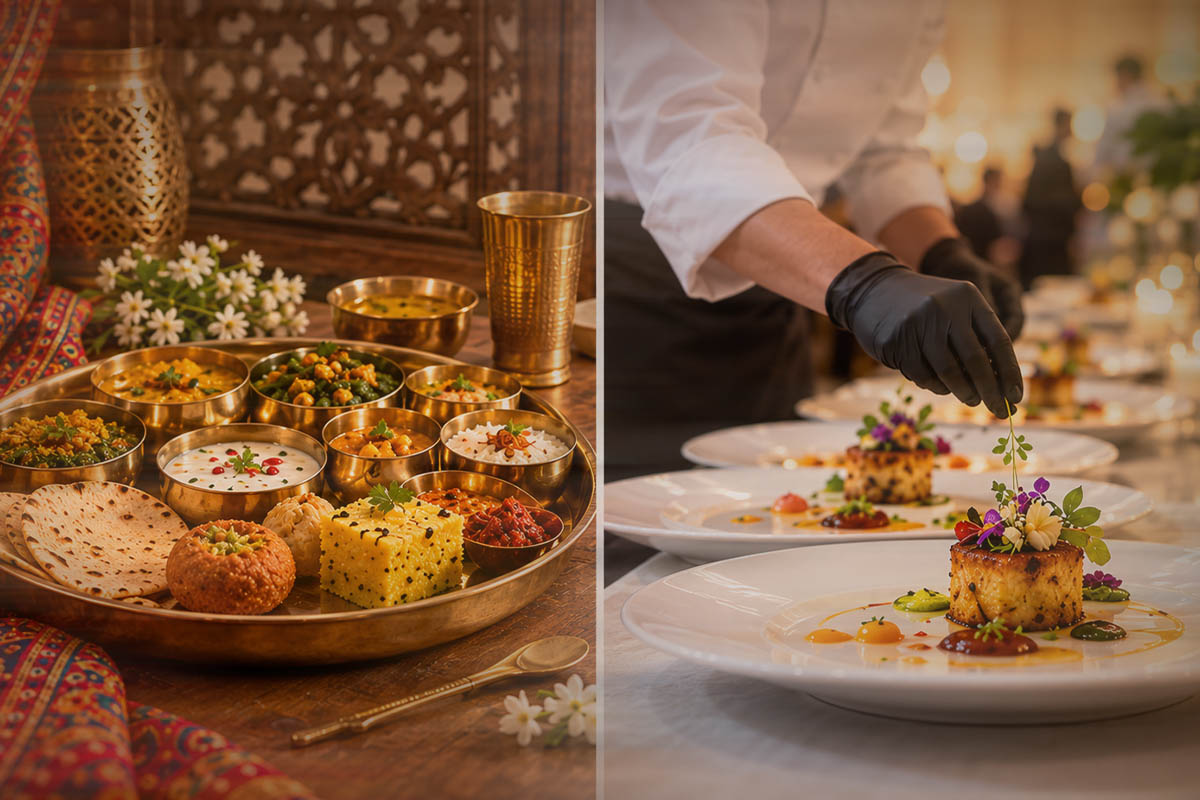
A Gujarati wedding menu is more than a selection of dishes. It reflects family traditions, regional flavours and the joy of bringing people together over food. But with changing preferences, diverse guest lists and contemporary wedding celebrations, couples often face one important question: how do you preserve authentic Gujarati cuisine while offering something new for today’s guests?
Choosing the right menu is an important part of planning a memorable celebration. When exploring luxury wedding venues in Ahmedabad, couples should consider not only the setting and decor but also how the venue can accommodate their catering preferences, service style, and guest requirements.
From traditional Gujarati thalis and farsan to international starters, live food counters and fusion desserts, this guide explains how to create a wedding menu that respects tradition while embracing modern tastes.
1. Why Luxury Wedding Venues in Ahmedabad Matter When Planning Your Wedding Menu
Food is one of the most memorable parts of a wedding. Guests may admire the decor and enjoy the entertainment, but a thoughtfully planned menu can bring the entire celebration together. The venue plays an important role in making that experience possible. Before finalising your menu, consider the catering arrangements, available dining spaces, service capacity, and flexibility to accommodate different food counters. When evaluating luxury wedding venues in Ahmedabad, look for a venue that allows you to discuss your preferred cuisine, guest count, dietary requirements, and presentation style in advance.
A well-planned Gujarati wedding menu should achieve three things:
- Preserve tradition: Include familiar dishes that reflect Gujarati culinary heritage and family preferences.
- Offer variety: Introduce contemporary options that appeal to guests with different tastes.
- Maintain balance: Ensure that the menu offers enough variety without becoming unnecessarily elaborate or repetitive.
The goal is not to replace traditional food with modern alternatives. It is to create a dining experience where both can complement each other.
From Cherished Recipes to Once-in-a-Lifetime Memories.
2. How to Combine Traditional Gujarati Food with Modern Wedding Catering
The easiest way to balance tradition and innovation is to plan the menu in categories rather than choosing individual dishes at random. This helps create a natural progression from familiar flavours to contemporary additions.
Keep signature Gujarati dishes at the heart of the menu
Start with the dishes that hold cultural or personal significance for your family. Depending on regional preferences and the wedding function, these may include dhokla, khandvi, patra, fafda, Gujarati dal, kadhi, undhiyu, rotli, thepla and shrikhand. Not every dish needs to appear at every function. A traditional lunch may call for a more elaborate Gujarati thali, while a sangeet or evening reception may suit a selection of regional snacks alongside other cuisines.
Ask family members which dishes are essential to the celebration. This ensures that the menu feels personal rather than simply following a standard catering package.
Introduce modern starters and global flavours
Once the traditional dishes are established, introduce contemporary options that add variety without overwhelming the menu. Consider baked appetisers, Mediterranean-inspired bites, Asian starters, grilled vegetables or familiar international favourites. Vegetarian options deserve particular attention at Gujarati weddings, where many families prefer predominantly vegetarian menus. Rather than offering too many similar dishes, select a few options that provide different flavours, textures and cooking styles.
For example, a traditional farsan counter can sit alongside a modern appetiser station, giving guests the choice to explore familiar favourites or try something different.
Create fusion dishes thoughtfully
Fusion food works best when it brings two culinary traditions together without losing the identity of either. You could explore a thepla-inspired wrap, a khakhra-based canapé or a contemporary dessert incorporating shrikhand. These are menu ideas to discuss with your caterer, not replacements for the original dishes. Keep fusion options selective. If every dish is heavily modified, guests may miss the authentic flavours they expect from a Gujarati wedding.
Balance live counters with traditional service
Live counters can make the dining experience more interactive. Depending on the catering setup, options might include freshly prepared chaats, dosa stations, pasta counters, or made-to-order regional snacks. Pair these with a well-organised traditional buffet or thali service. This gives guests variety while ensuring that those who prefer a familiar Gujarati meal can enjoy one comfortably. Before finalising the layout, confirm the number of counters, staffing, queue management, food replenishment, and space required for guests to move between stations.
3. Plan a Menu That Reflects the Destination Wedding Experience
A wedding menu should complement the celebration’s location, season, and format. The requirements for a daytime ceremony may differ significantly from those of a multi-day destination wedding. For couples considering destination wedding resorts in Gujarat, local culinary traditions can become an important part of the guest experience. Gujarati dishes offer a way to introduce visitors to regional flavours, while contemporary additions help accommodate diverse preferences.
Consider these menu-planning factors:
- The wedding season: Discuss seasonal ingredients and suitable dishes with your caterer. For outdoor celebrations during warmer months, lighter preparations and refreshing beverages may be preferable to an excessively heavy menu.
- The event format: A formal wedding lunch may suit a traditional thali, while an evening reception could feature multiple food stations and a broader selection of cuisines.
- The guest profile: Account for children, older guests, international visitors, and people with different dietary preferences.
- The number of functions: Give each function its own menu identity. A welcome dinner, mehendi, sangeet, and reception do not need to repeat the same dishes.
- Food presentation: Traditional dishes can be presented elegantly without changing their essential flavours. Thoughtful plating, organised counters, and clear menu labels can make familiar cuisine feel special.
When choosing among destination wedding resorts in Gujarat, discuss the menu concept with the venue team early so that dining arrangements can be aligned with the celebration schedule and available facilities.
4. Choosing the Right Menu for the Wedding Reception
The reception is often one of the largest wedding gatherings, bringing together relatives, friends, colleagues, and guests from different backgrounds. A balanced menu should offer enough choice while remaining easy to navigate. When comparing the best resorts for a wedding reception in Ahmedabad, consider how the catering arrangements will support the expected guest count, dining format, and menu complexity.
A practical reception menu could follow this structure:
Menu category | Traditional option | Modern addition |
Welcome snacks | Dhokla or khandvi | Contemporary vegetarian canapes |
Starters | Gujarati farsan | Asian or Mediterranean-inspired appetisers |
Main course | Gujarati dal, kadhi, rotli and seasonal shaak | A complementary regional or international main course |
Live counters | Chaat or freshly prepared snacks | Pasta or another made-to-order option |
Desserts | Shrikhand, mohanthal or basundi | Cheesecake, mousse or plated desserts |
Beverages | Chaas or traditional sharbat | Fresh mocktails and contemporary coolers |
This is a sample framework rather than a fixed menu. The final selection should reflect family preferences, the season, the caterer’s expertise, and the number of guests. The most important consideration is variety with purpose. Offering several versions of the same starter or too many rich desserts can increase food waste without improving the guest experience.
5. Make Guest Comfort a Priority at Wedding Resorts in Ahmedabad
A wedding menu should be planned around the people who will enjoy it. Even an elaborate spread can disappoint guests if the food is difficult to access, dietary needs are overlooked, or service becomes slow during peak dining hours. Couples exploring wedding resorts in Ahmedabad should discuss the practical aspects of food service alongside menu selection. Start by estimating the guest count accurately and understanding when guests are likely to arrive at the dining area. Coordinate food service with the wedding programme so that guests are not expected to choose between an important ceremony and dinner. Keep vegetarian and other dietary options clearly identified. Confirm how the caterer will manage food allergies, ingredient information, separate preparation requirements and special meals where necessary. Also consider the needs of children and older guests. Accessible counters, clear signage, comfortable seating, and a sensible arrangement of food stations can make a significant difference.
Finally, ask about food replenishment, serving temperatures, hygiene procedures, and staffing. These operational details are just as important as the menu itself.
Where Gujarati Traditions Meet Modern Wedding Magic.
6. Plan Multi-Day Celebrations with Wedding Resorts with Rooms in Ahmedabad
Multi-day weddings create more opportunities to showcase Gujarati cuisine, but they also require careful menu planning. Repeating the same dishes at every function can make the dining experience feel predictable, even when the celebrations themselves are different. For families comparing wedding resorts with rooms in Ahmedabad, accommodation and event coordination are important considerations alongside food service.
A multi-function menu plan could look like this:
- Welcome dinner: Familiar Gujarati snacks with a contemporary appetiser selection.
- Mehendi lunch: A relaxed menu featuring regional favourites and refreshing beverages.
- Sangeet evening: Live counters, finger foods and dishes that are easy to enjoy between performances.
- Wedding lunch: A traditional Gujarati thali or a menu centred on family favourites.
- Reception: A broader selection of Indian and international dishes, with a thoughtfully curated dessert spread.
This approach gives each function a distinct identity while preserving the wedding’s Gujarati character. If guests are staying at the same property, coordinate meal timings, guest arrivals, and function schedules with the venue team. Confirm the accommodation inventory, catering arrangements, and services available rather than assuming that every package includes all meals or event facilities.
How Radhe Upavan Fits Into Your Wedding Planning
A well-planned wedding menu requires collaboration between the couple, family members, caterers, wedding planners, and the venue team. The venue should be involved early enough to discuss the dining layout, event schedule, and practical requirements.
Radhe Upavan offers wedding spaces and accommodation options that couples can explore when planning their celebrations. The Peacock and The Cave are covered, air-conditioned spaces to consider for functions where an indoor setting is preferred, subject to availability and suitability for the event. When discussing your wedding plans with the Radhe Upavan team, ask about the catering arrangements available, menu customisation options, food-counter layouts, guest capacity, and coordination with external catering vendors, where applicable. You can also discuss how different menus might work across your wedding functions, from a traditional Gujarati lunch to a contemporary reception.
For couples considering luxury wedding venues in Ahmedabad, it is worth clarifying which catering services and facilities are included, what can be customised, and which arrangements require separate vendors. This makes budgeting and coordination easier before the final menu is approved.
Frequently Asked Questions
1. How do luxury wedding venues in Ahmedabad help with wedding menu planning?
The venue’s dining spaces, service arrangements, event schedule, and catering options influence how a wedding menu can be delivered. Discuss guest capacity, counter layouts, menu flexibility, and catering responsibilities before confirming your venue.
2. How can I balance traditional Gujarati food with modern wedding dishes?
Start with essential Gujarati dishes, then add a curated selection of contemporary starters, live counters, fusion items, and international options. Maintain a clear balance so that traditional flavours remain central to the menu.
3. What should I consider when choosing destination wedding resorts in Gujarat?
Evaluate event spaces, catering arrangements, accommodation, accessibility, guest capacity, and the ability to coordinate food service across multiple functions. Confirm which facilities and services are available at the property.
4. What food should I include at a wedding reception?
A balanced reception menu can include Gujarati farsan, traditional main courses, a few international or contemporary starters, live counters, and a mix of regional and modern desserts. Tailor the final selection to the guest profile, season, and event format.
5. How can I plan different menus for a multi-day Gujarati wedding?
Assign a distinct food theme to each function. For example, serve a traditional Gujarati thali at the wedding lunch, lighter regional snacks at the mehendi, and a broader selection of cuisines at the reception. Avoid repeating the same signature dishes at every event.
Conclusion
Balancing traditional Gujarati food with modern wedding menus is about preserving the flavours that matter while creating an enjoyable dining experience for every guest. A thoughtful mix of regional favourites, contemporary starters, fusion creations, and international options can give each wedding function its own personality. When comparing luxury wedding venues in Ahmedabad, consider how the venue can support your menu preferences, guest requirements, and overall celebration. The right planning approach can help bring the food, setting, and schedule together without losing the cultural identity of your wedding.
Your Wedding Menu Should Tell a Story. Make Every Dish Count.